
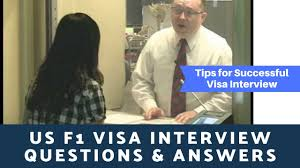
The moment has arrived. You have your acceptance letter. You have paid your SEVIS fee. You have filled out the DS-160 form. Now there is only one thing standing between you and that plane ticket to America. The visa interview.
I know exactly how you feel right now. Your heart is racing. You are imagining a stern officer behind thick glass firing difficult questions at you. You are worried you might say the wrong thing and watch your American dream disappear.
Let me tell you something that might calm your nerves. The visa officer is not trying to trick you. They have one simple question they want answered. Will you come back home after your studies? Every single question they ask is just a different way of getting to that answer.
So let me walk you through the most common questions and show you how to answer them honestly and confidently.
Tell me about yourself
This is usually the first question. It feels simple, but it is actually one of the most important. The officer is not looking for your life story. They want to hear your purpose in about thirty seconds.
Keep your answer focused on your academic and career journey. Mention where you are from, what you studied, and why you want to go to America now. Do not talk about your favorite movies or your childhood pets. Stay relevant.
A good answer sounds like this. I completed my bachelor’s degree in computer science in Mumbai last year. I have been working as a junior developer for six months, and I realized I need deeper knowledge in data science to grow in my field. That is why I applied to the master’s program at Boston University.
Notice how this answer connects the past to the present to the future. It shows a logical path. That is exactly what the officer wants to see.
Why did you choose this university?
This question separates students who did their homework from those who just picked a name out of a ranking list. You need to show genuine research.
Talk about specific professors whose work interests you. Mention particular labs, research centers, or courses that are unique to that program. Explain how this university fits your specific goals.
Avoid answers like the university is famous or my friend went there. Those answers tell the officer you have not thought deeply about your decision.
Instead say something like this. I chose the University of Texas at Dallas because of their Center for Machine Learning. Professor Chen’s research on natural language processing aligns directly with what I want to study. I also looked at their curriculum and saw they offer a hands-on capstone project with local companies, which is rare in other programs I researched.
Why the United States and not your home country or another country?
Be honest but diplomatic. The United States has world-class education. That is simply true. But also acknowledge the strengths of your home country without putting it down.
You can say something like this. India has excellent universities, but the specific research facilities and industry connections in my field are more developed in the US. The program I chose has partnerships with tech companies that do not exist back home. My plan is to learn from the best and bring that knowledge back to contribute to my country’s growing technology sector.
Notice how this answer shows respect for your home country while honestly explaining why you want to study abroad. The officer will appreciate that balance.
How will you fund your studies?
This is where many students get nervous. Money is a sensitive topic. But the officer just needs to know you are not planning to work illegally to pay for everything.
Be prepared to show documents. Bank statements. Scholarship letters. Sponsorship letters from family members. Have these ready before the interview so you are not fumbling through your bag.
Your answer should clearly state where the money is coming from. My parents have saved for my education over the last ten years. Here are their bank statements showing sufficient funds. I also received a twenty percent tuition scholarship from the university. The total amount covers my tuition and living expenses for the full two years.
Do not say a family friend is paying unless that person has legally documented that arrangement. Vague answers about relatives helping out raise red flags.
What are your plans after graduation?
Here it is. The big question. The officer wants to hear that you intend to return to your home country. Even if you secretly hope to work in America after graduation, your answer should focus on returning home.
Talk about specific job opportunities in your country. Mention companies you want to work for. Describe how your US degree will help you succeed back home.
A strong answer sounds like this. After completing my degree, I plan to return to Nigeria and work in the renewable energy sector. My country is investing heavily in solar power, and there are very few engineers with advanced training in this area. I have already been in touch with a company called Green Energy Solutions, and they have expressed interest in hiring me when I return.
This answer shows specific knowledge of your home country’s job market. It demonstrates that you have thought about your future. And it clearly states your intention to return.
Do you have relatives in the United States?
Be completely honest here. Lying about relatives is one of the fastest ways to get denied or even banned from future visas.
Having relatives in the US is not automatically a problem. Many students have aunts, uncles, or cousins in America. The officer just wants to know if those relatives might tempt you to overstay your visa.
If you have relatives, say so clearly. Then immediately address the concern before the officer has to ask. Yes, my uncle lives in Chicago. He has his own family and his own life. I will be studying in Boston, which is far away. My focus is entirely on my education, and I have strong reasons to return to my family and career in my home country.
What will you do if your visa is denied?
This question catches many students off guard. The officer wants to see if you have a backup plan or if you are desperate to get to America by any means necessary.
A good answer shows maturity and honesty. If my visa is denied today, I will ask for the reason and work on addressing it. I might reapply after strengthening my application or consider similar programs in other countries. But I remain hopeful that you will see my genuine intention to study and return home.
Do not say you have no backup plan. Do not beg. Do not get emotional. Stay calm and professional.
Have you traveled to any other countries before?
If you have traveled internationally, especially to countries with strict visa policies like the UK, Canada, or Schengen zone countries, mention this. It shows you have a history of following immigration rules and returning home.
If you have not traveled abroad, that is fine too. Just be honest. Many students get their first passport specifically for studying in America.
A few final tips before you go
Practice your answers out loud. Not just in your head. Say them to a friend or family member. Record yourself on your phone. Hearing your own voice will help you sound more natural and less rehearsed.
Bring every document you can think of. Even if you think you will not need it. The financial documents, the acceptance letter, the SEVIS receipt, your transcripts, your test scores. Organize them in a clear folder so you are not shuffling papers when the officer asks for something specific.
Dress like you respect the occasion. You do not need a suit and tie, but avoid ripped jeans and t-shirts with slogans. Business casual shows you take this seriously.
Arrive early but not too early. Thirty minutes before your appointment is plenty. Any earlier and you will just sit there getting more nervous.
And here is the most important thing I can tell you. Breathe. The officer has seen thousands of students just like you. They know you are nervous. They expect it. What they want to see is honesty, preparation, and clear intentions.
You have worked hard to get to this point. You have earned that acceptance letter. Now walk into that interview room knowing that you belong there. Answer their questions clearly. Look them in the eye. And tell them your story.
Frequently Asked Questions
How long does the visa interview take?
Most interviews last between three and five minutes. That is it. All those weeks of preparation come down to a few minutes of conversation. Some interviews run longer if the officer has concerns or needs to see additional documents. But do not be alarmed if yours is short. A quick interview usually means you answered everything clearly and the officer saw no red flags.
What documents must I bring?
You need your I-20 form, your DS-160 confirmation page, your SEVIS fee receipt, your passport, and your visa appointment confirmation. Those are non-negotiable. Without any one of these, you will not even get to the interview window.
Beyond those, bring your acceptance letter, financial documents showing you can pay for your studies, academic transcripts, test scores, and proof of ties to your home country. That last one could be a job offer letter, property documents, or a letter from a family business. Bring everything in a clear folder so you are not digging through a messy bag when the officer asks for something.
What should I wear to the interview?
Business casual is your safest choice. A collared shirt or a simple blouse with clean pants works perfectly. You do not need a suit and tie. But you also should not show up in ripped jeans, flip flops, or a t-shirt with a slogan on it. Your appearance tells the officer how seriously you take this process. Dress like you respect the opportunity you are asking for.
Can I use a translator during the interview?
No. The visa officer needs to hear your English directly. The interview is partly a test of your ability to communicate in English. If you cannot answer basic questions without a translator, the officer will likely conclude you are not ready for academic life in the United States.
What if I do not understand a question?
Ask politely for clarification. Say something like, I am sorry, could you please repeat the question? That is perfectly fine. What you should not do is guess what the officer asked and give an unrelated answer. That looks like you are avoiding the question or do not understand English well enough to follow a conversation.
Will the officer check my social media?
Visa applications now ask for your social media handles from the past five years. The officer may glance at your profiles before the interview. They are looking for anything that suggests you plan to work illegally, overstay your visa, or engage in activities that violate US law. Clean up your profiles before you apply. Remove any posts that joke about immigration violations or working without authorization.
Can my family come with me to the interview?
Your family can wait in the waiting area, but they cannot come to the interview window with you unless they are also applying for visas. Students over fourteen years old typically attend the interview alone. If you are younger, a parent may accompany you, but they will not be allowed to answer questions on your behalf.
What happens if my visa is denied?
You will receive a paper explaining the reason for the denial. Most common reasons are insufficient ties to your home country, lack of funds, or concerns about your academic intentions. You can reapply for another interview. There is no automatic waiting period, though you should address the reason for the denial before trying again. Do not just show up the next week with the same documents and expect a different result.
How soon after the interview do I get my visa?
If you are approved, you usually receive your passport with the visa stamp within one to two weeks. The exact time depends on the embassy or consulate where you applied and how busy they are. Some offer expedited processing for an additional fee. Do not book your flight until you have your passport back with the visa inside.
Can I work while studying on a student visa?
Yes, but with strict limits. On-campus work is allowed for up to twenty hours per week during the school year and full time during breaks. Off-campus work is only allowed in specific circumstances like severe economic hardship or through authorized programs like Curricular Practical Training. Do not assume you can work off-campus to cover your living expenses. That is a fast path to losing your visa.